Russell Belk’s concept of the extended self explores how external possessions and objects can become incorporated into our sense of identity and function as forms of external scaffolding for the self.
In moments of crisis, however, the relationship between the individual and the objects surrounding them can become particularly visible. What appears to be a simple attachment to things may reveal deeper psychological processes through which identity is maintained, reconstructed, or protected.
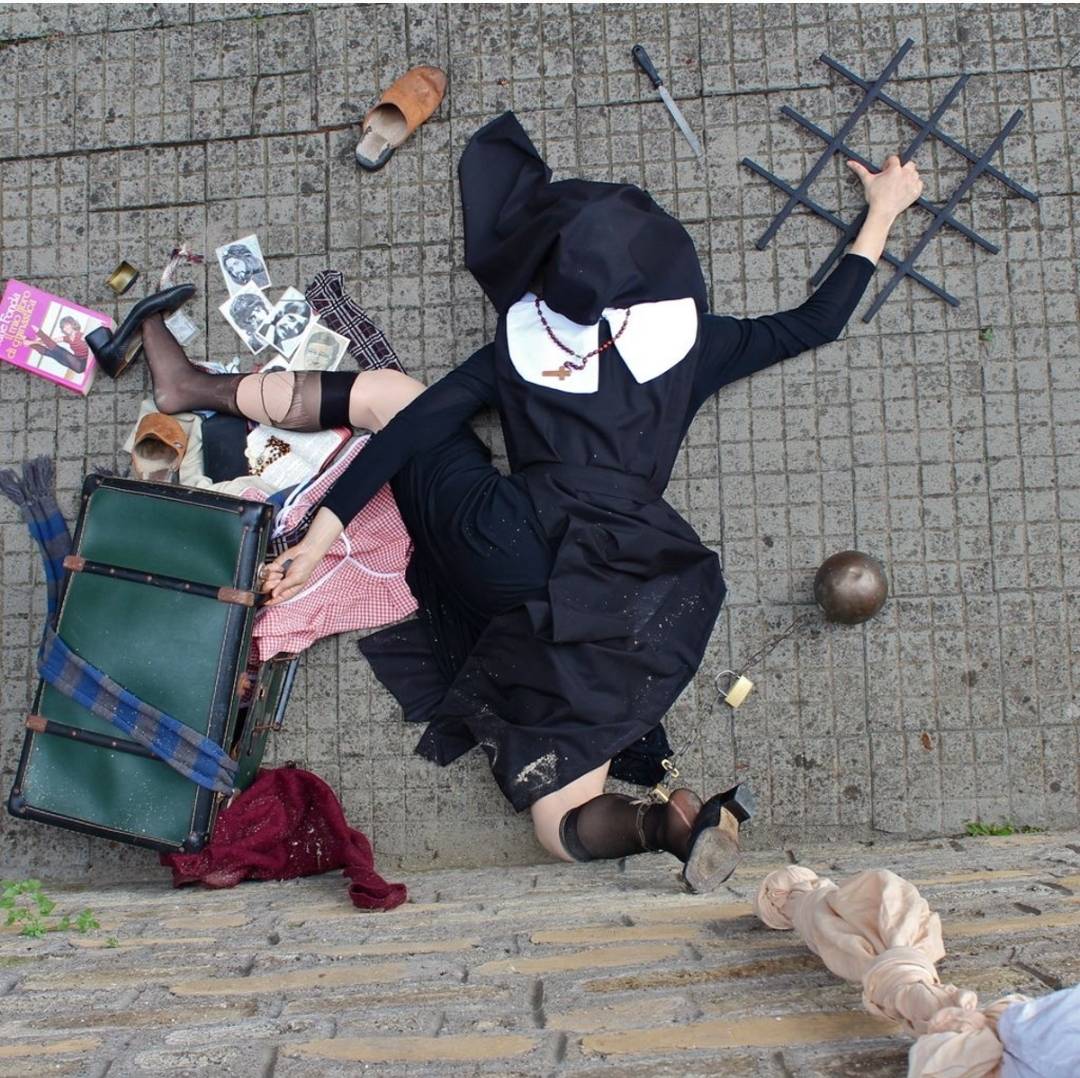
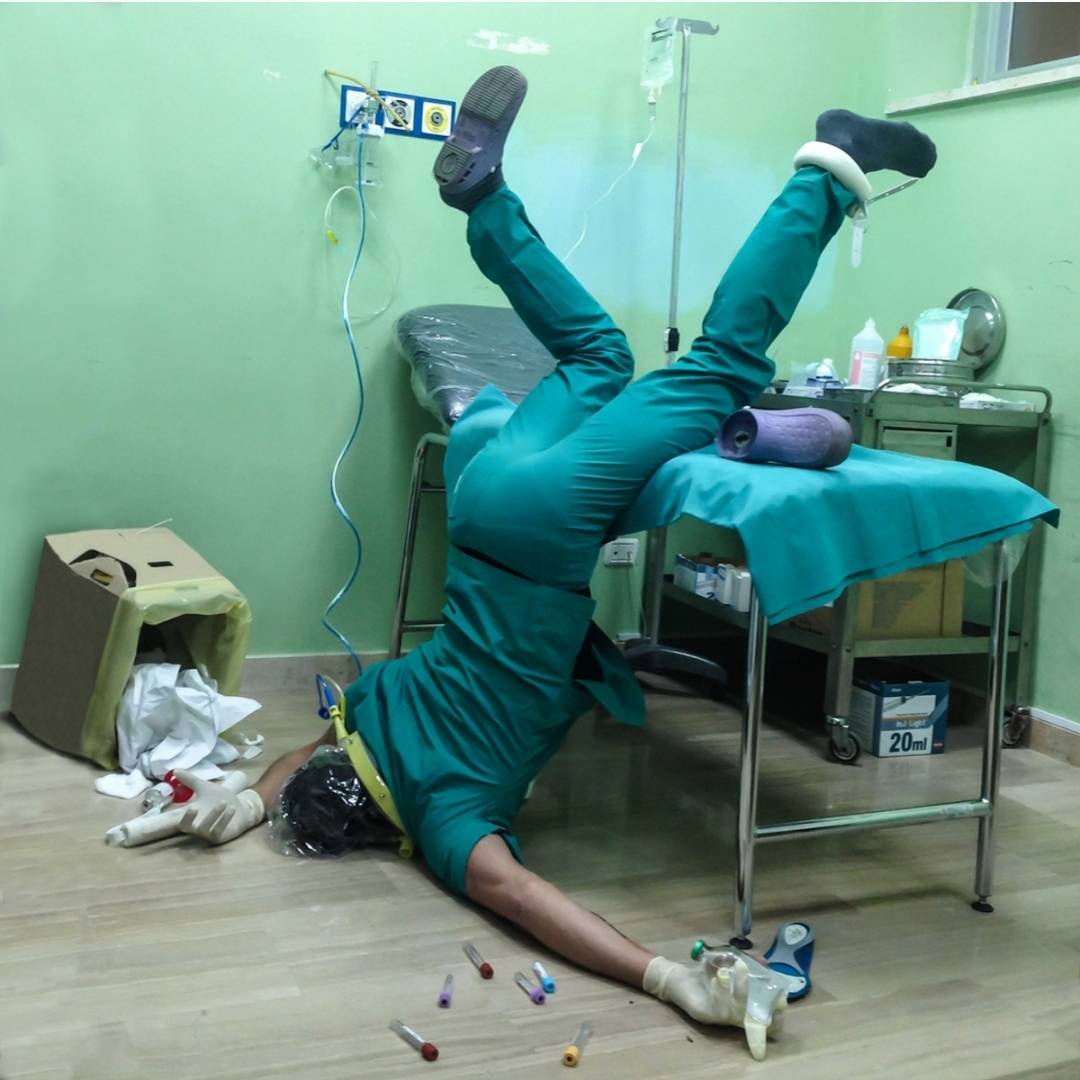
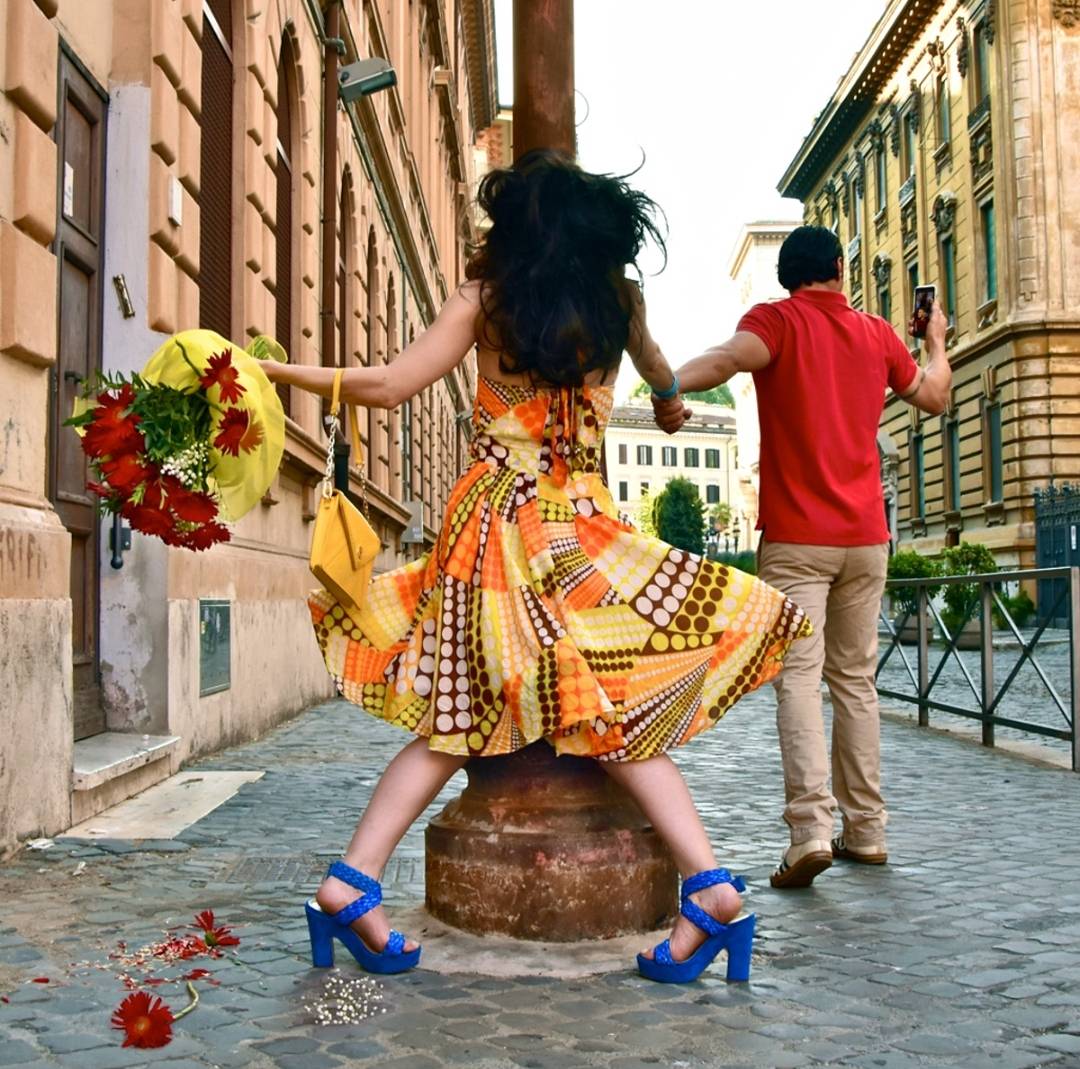
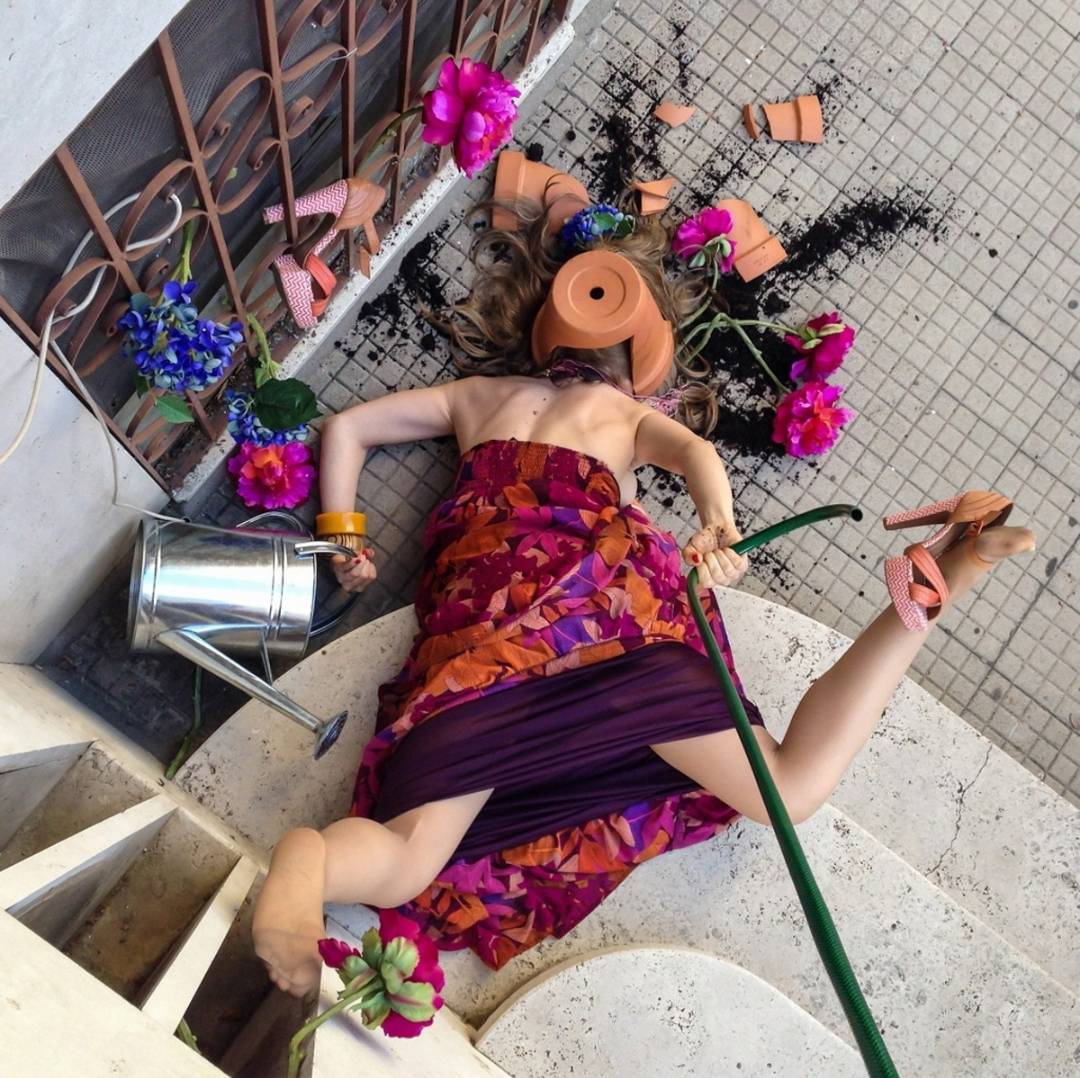
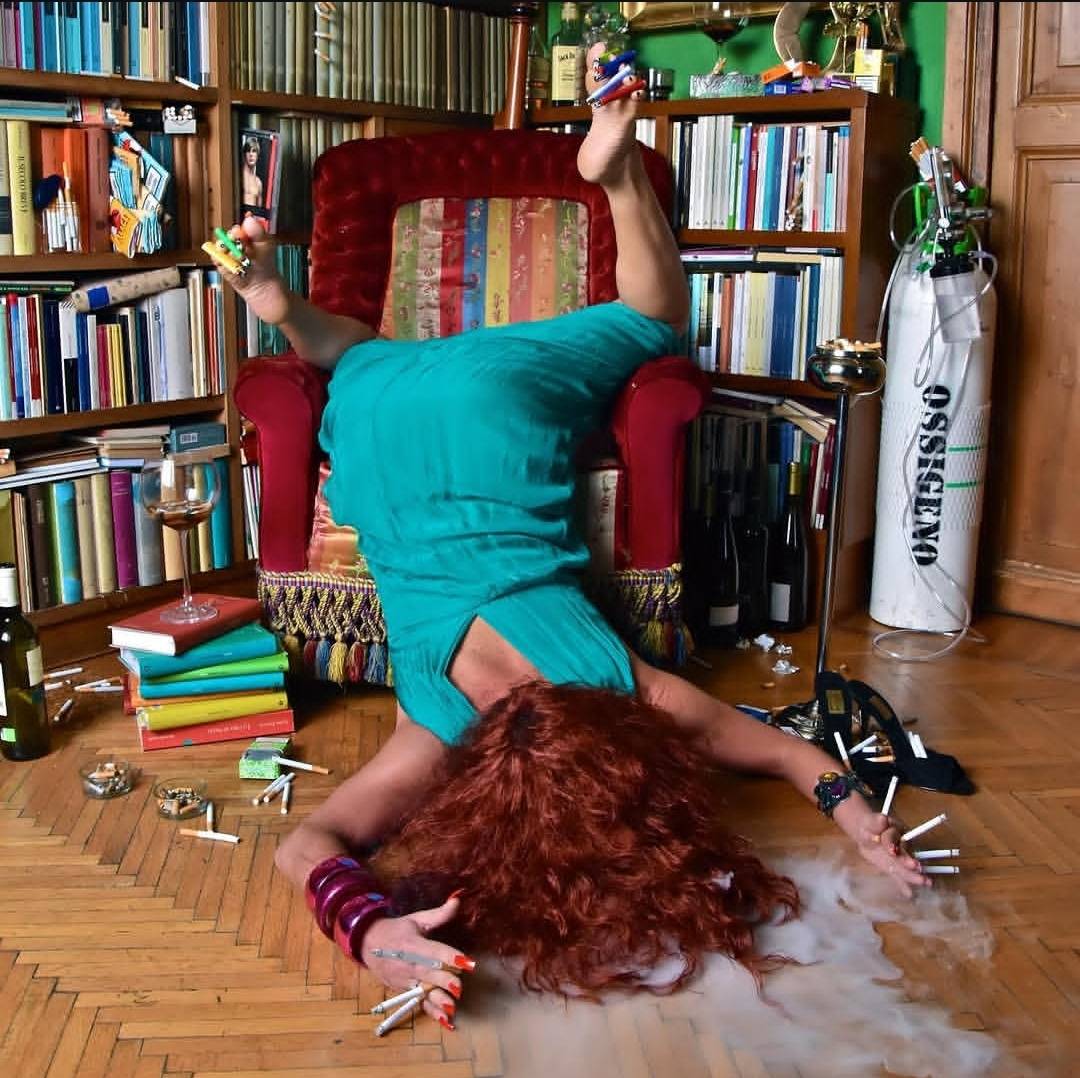
Sandro Giordano’s photographic series In Extremis offers a striking visual representation of this tension. His staged images depict bodies at the moment of collapse, surrounded by objects and environments that appear to participate in the narrative of the fall.
From a psychological perspective, these objects can be understood as more than passive elements within the image. They may function as extensions of the individual, carrying meanings associated with identity, memory, achievement, social position, and personal history.
At the critical moment of falling, the relationship between body, object, and environment becomes visible. The body is no longer presented as an isolated psychological entity, but as something continuously connected to the material world around it.
The reconstruction of falling can therefore be read as a metaphor for moments in which the familiar structure of identity becomes unstable. When the body loses its balance, the objects surrounding it may simultaneously reveal the supports through which the self has been constructed.
The therapeutic function Giordano describes can also be considered in relation to the possibility of transforming an experience of collapse into an image that can be observed, reflected upon, and given meaning.
Perhaps the question is not simply what we possess, but how much of ourselves we have invested in what surrounds us. When an object becomes part of the extended self, losing it may feel like losing a fragment of identity.