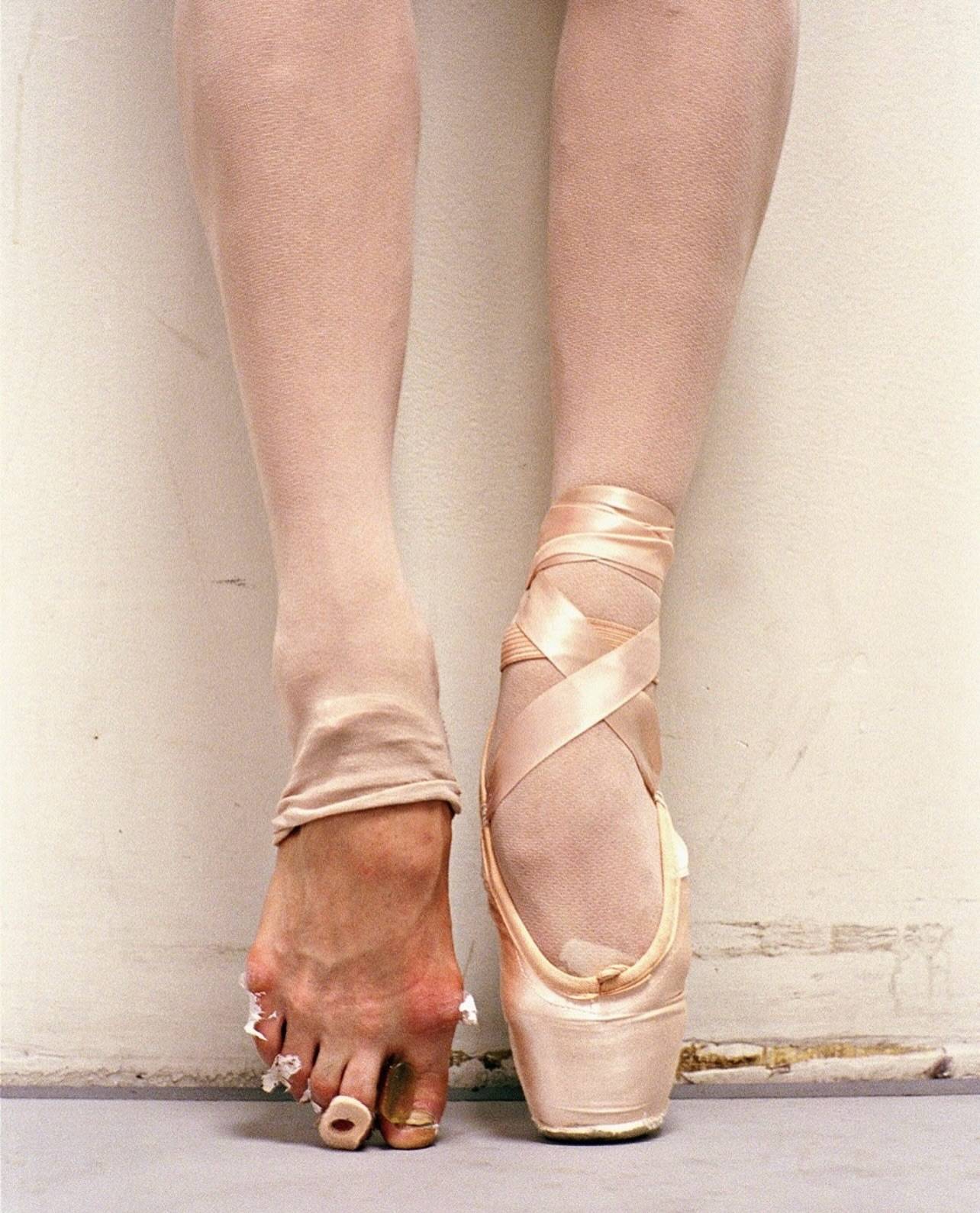
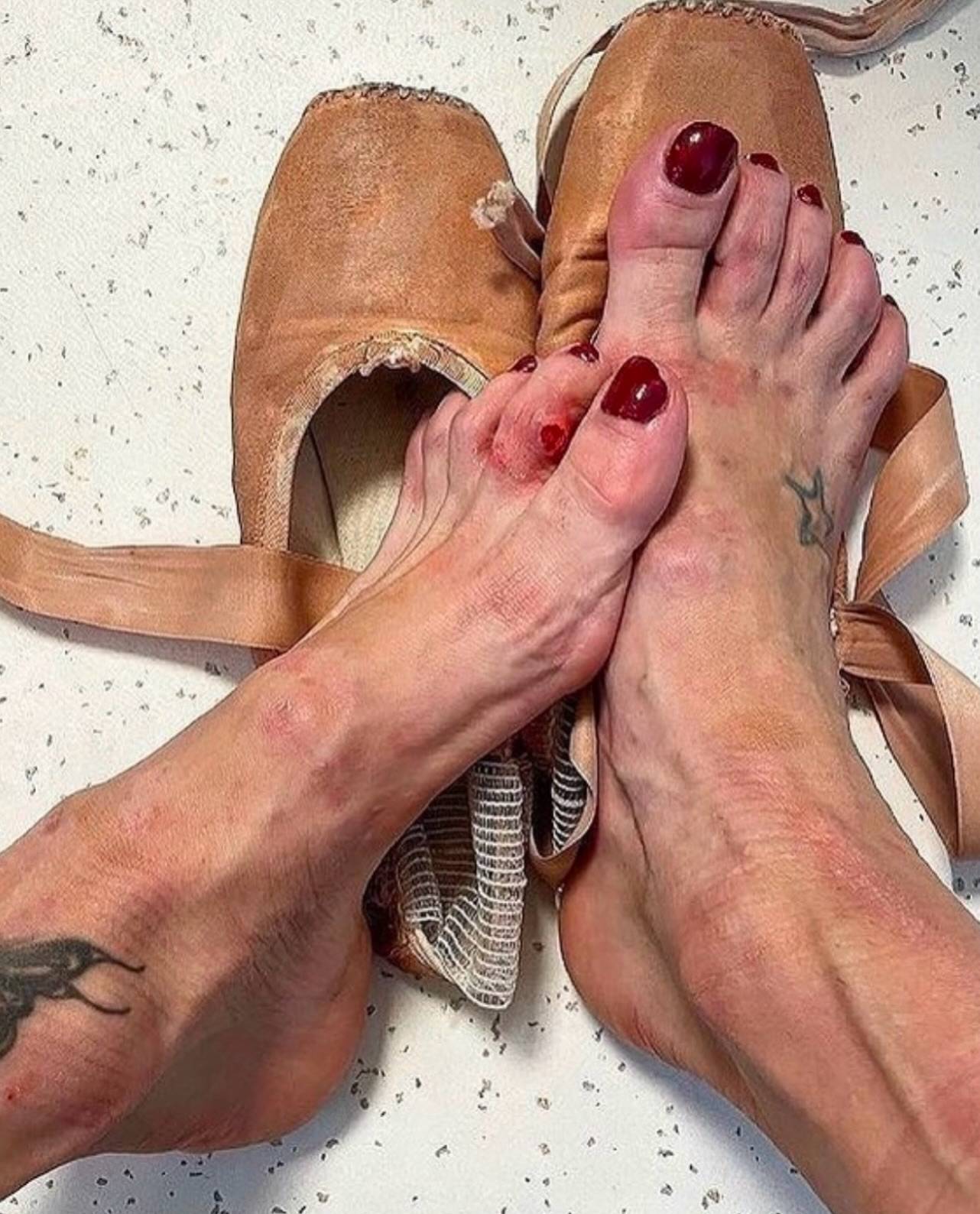
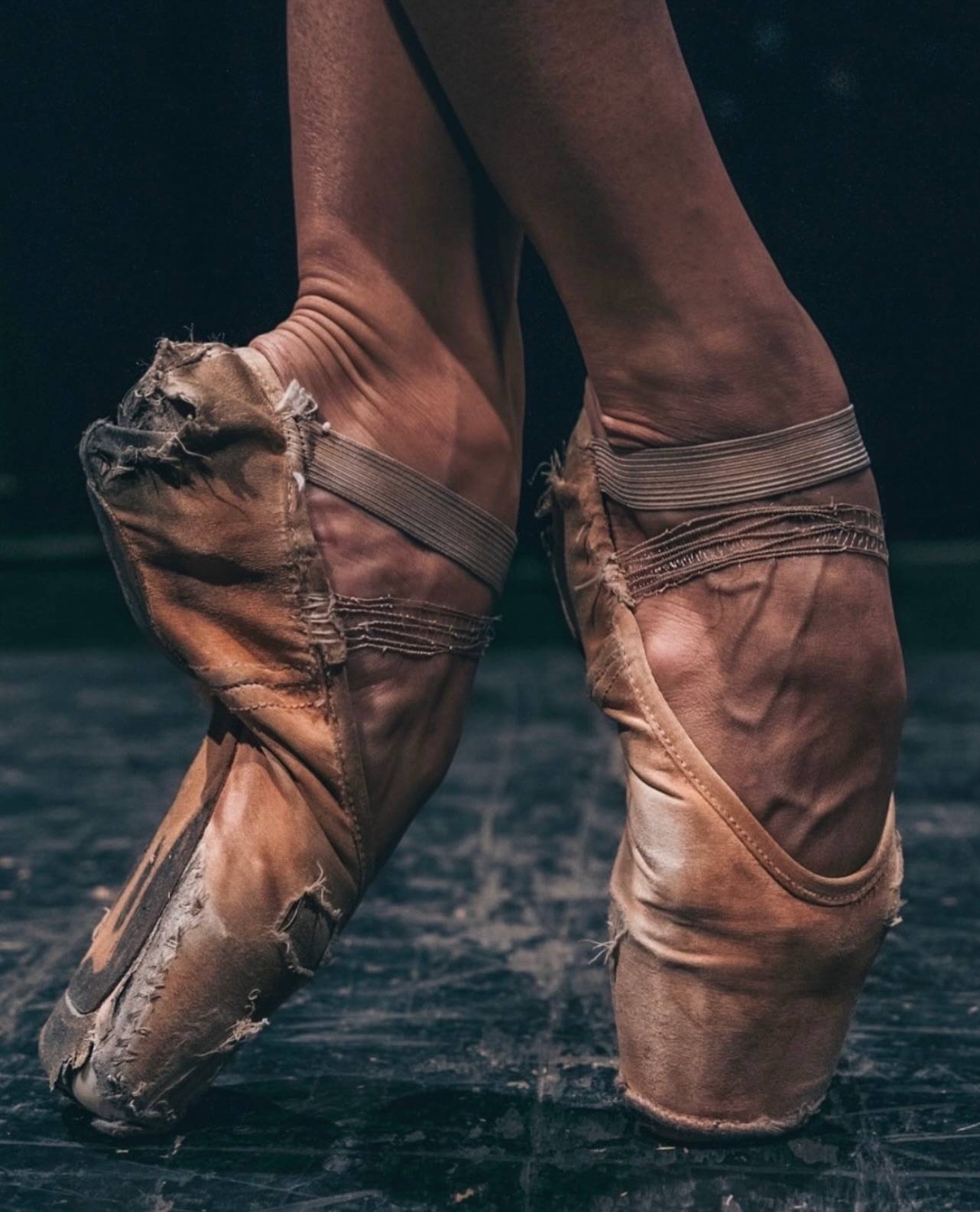
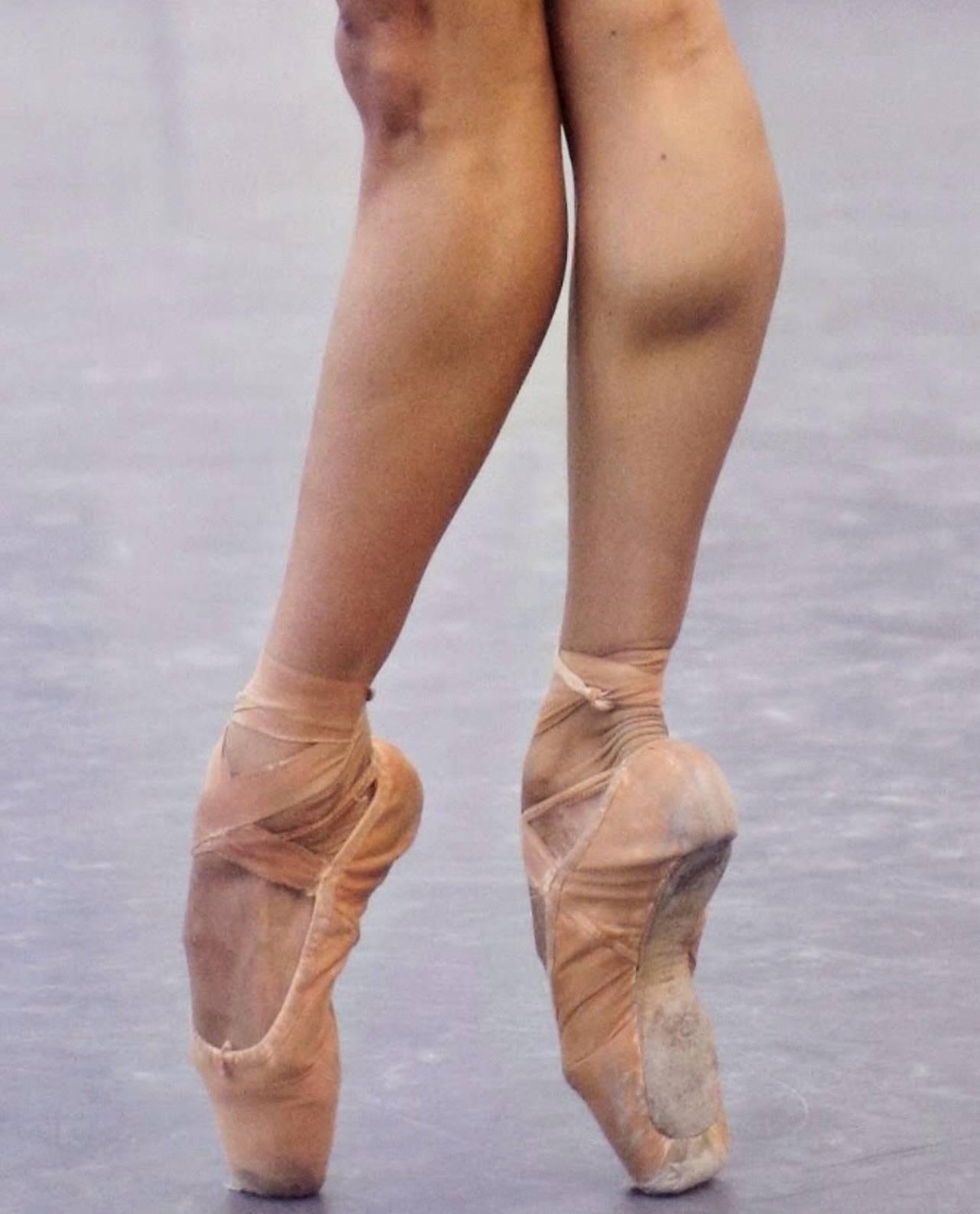
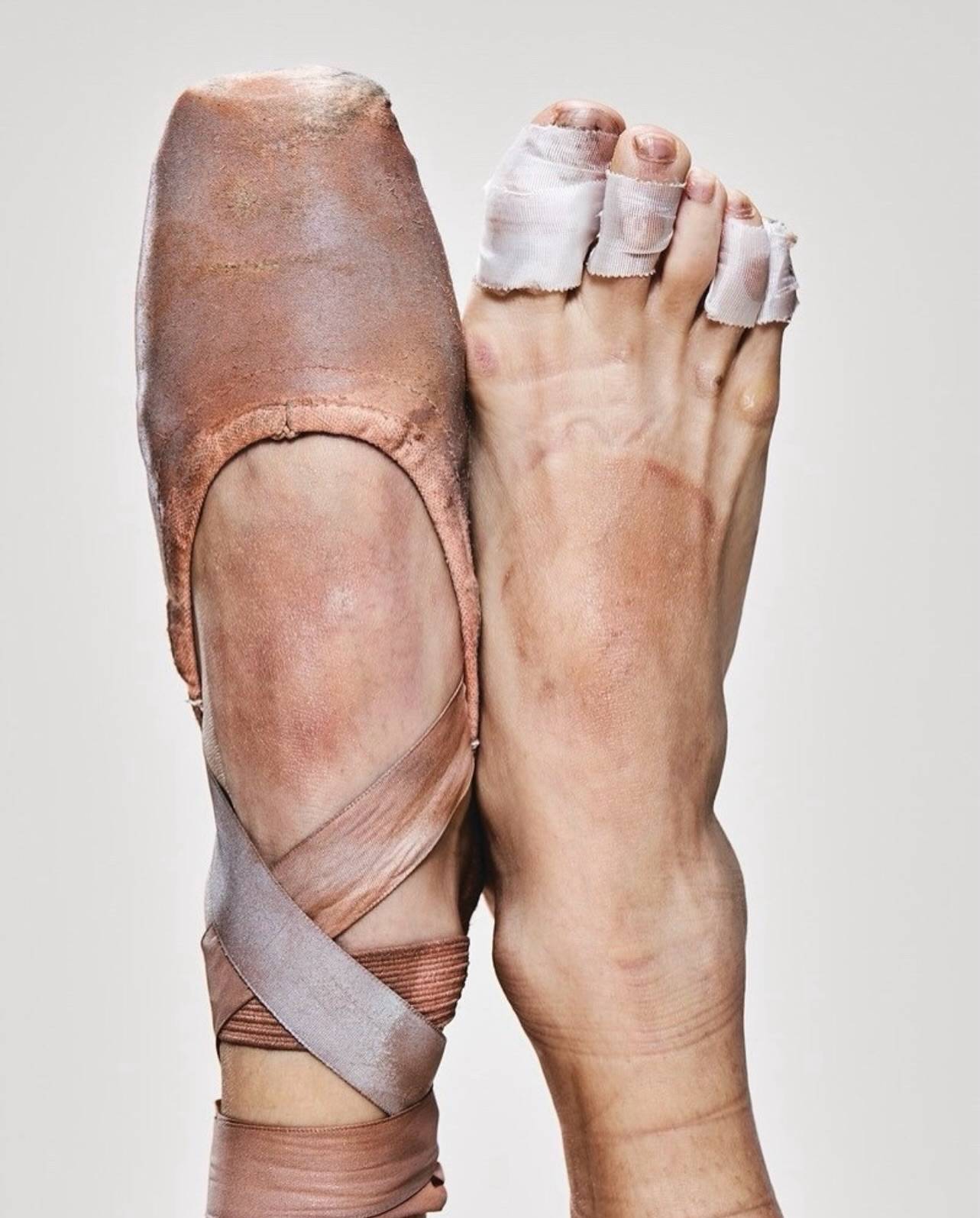
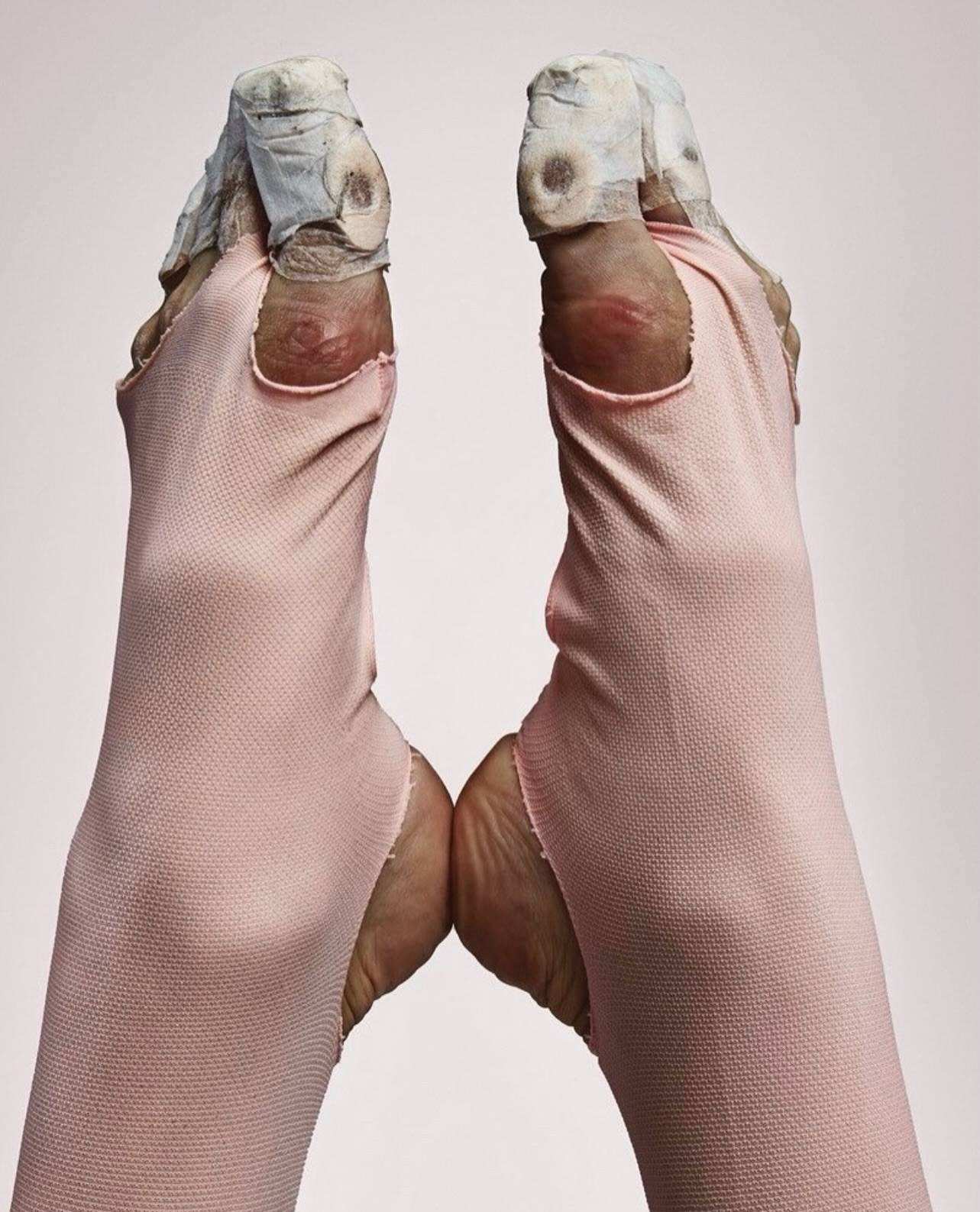
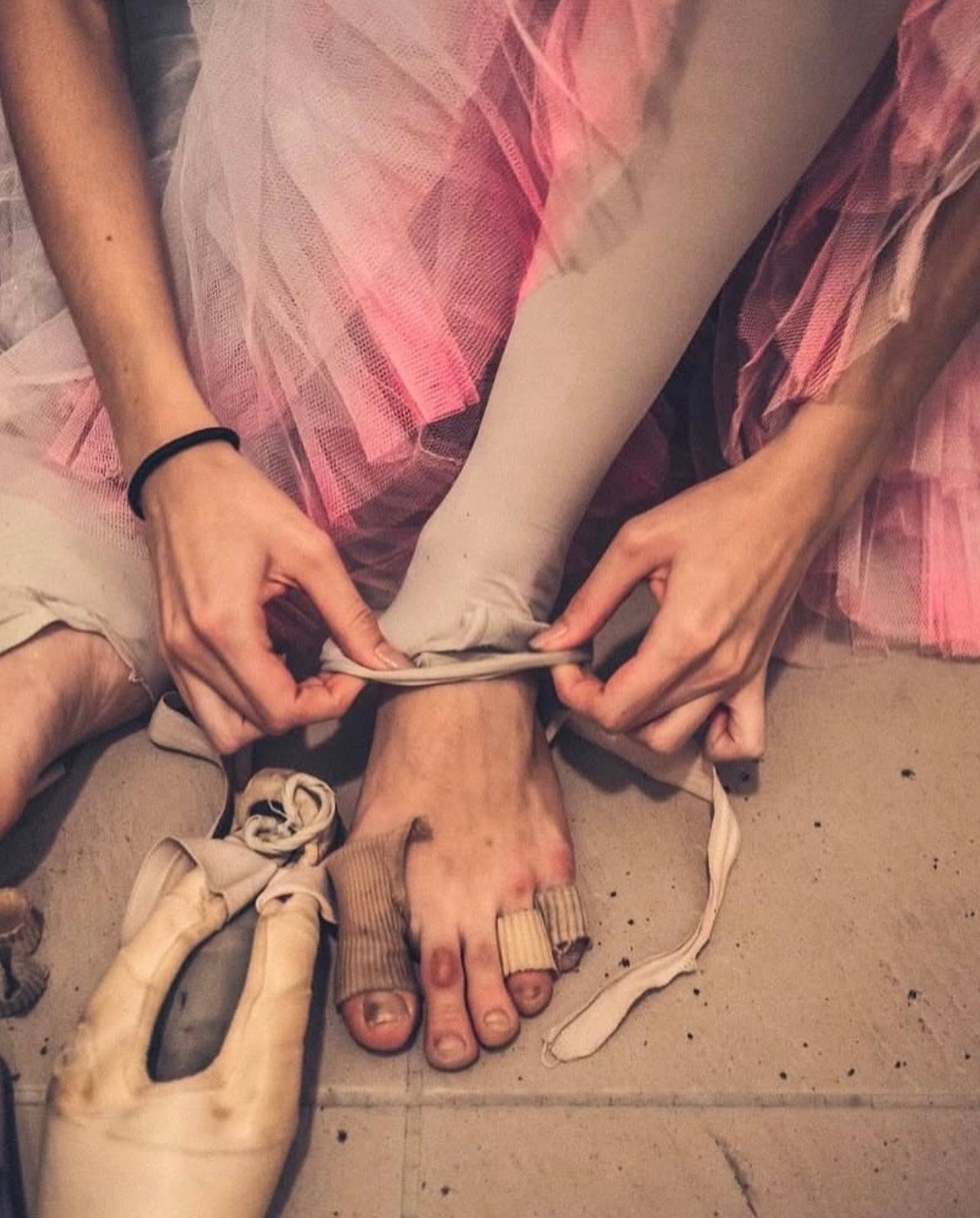
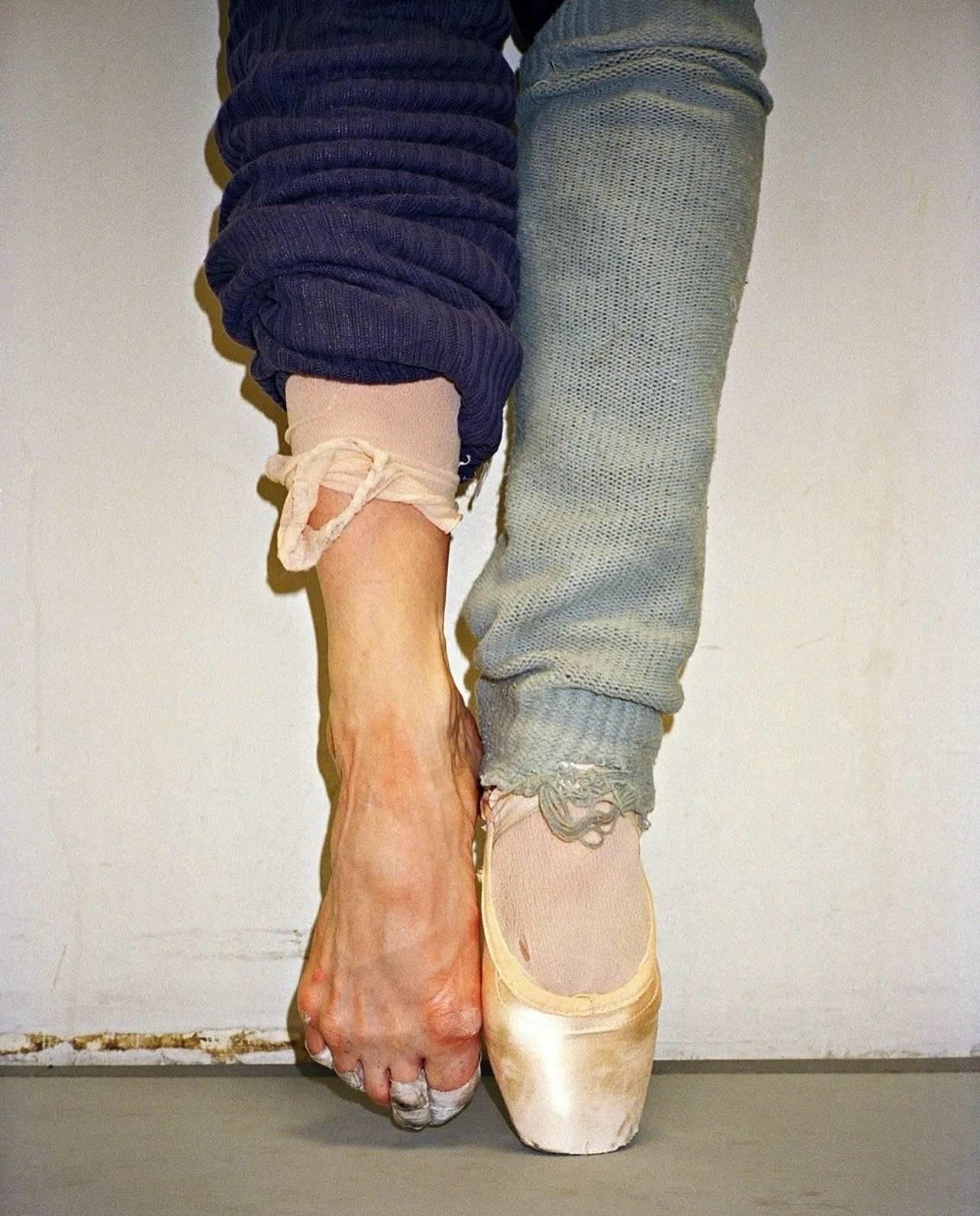
The belief that no success is possible without sacrifice can become an internalized norm within highly competitive environments. In ballet, the body may gradually be treated not as a partner in development, but as an expendable instrument for reaching an idealized image.
No meaningful progress is achieved without effort. Difficulty, practice, persistence, and tolerating failure are inseparable from growth in art, sport, and intellectual work.
Psychology, however, distinguishes between constructive effort and a harmful belief system. Constructive effort includes awareness of the body, acceptance of limitations, feedback, and the possibility of adjustment.
A harmful belief emerges when personal worth becomes dependent on increasingly high costs and the systematic disregard of bodily signals. Natural difficulty then becomes self-sacrifice: physical pain, emotional exhaustion, and basic needs are interpreted as necessary prices for achievement.
The work of Marlene Fuertes Castro can be read as a powerful mirror of this tension, where the image of success risks consuming the biology of the individual.
Mental health involves recognizing the moment when sacrifice is no longer serving growth. The question is not whether success requires effort, but whether effort remains compatible with the preservation of the self.
Can we succeed without destroying ourselves? Yes—but only when effort is regulated through awareness, flexibility, and respect for the limits of the body.